
How often do you actually think about your bone health?
Probably not very often! It's one of those things we tend to take for granted, until something happens that makes us think about it.
But looking after our bones is important at every stage of life, and the good news is that there are plenty of things we can do through nutrition and lifestyle to help keep them strong and healthy.
Why does bone health matter as we get older?
Our bones are generally at their strongest around the age of 30. After that, bone strength gradually declines as part of the natural ageing process.
For women, this decline can speed up around the menopause as oestrogen levels fall. Bone loss also becomes more of a concern as we get older, increasing the risk of osteoporosis and fractures.
Osteoporosis is a condition where bones become weaker and more likely to break, sometimes following something as simple as a minor fall.
It's not something we necessarily notice happening, which is why prevention and understanding our individual risk factors are so important.
What can contribute to weaker bones?
There isn't just one cause. A combination of our hormones, diet, lifestyle, medical history and age can all play a part.
Some of the main risk factors include:
- Menopause and falling oestrogen levels: Oestrogen helps protect our bones, so hormonal changes around menopause can lead to faster bone loss.
- Smoking: Smoking is associated with an increased risk of osteoporosis and fractures.
- Excessive alcohol: Drinking too much alcohol can affect bone health and increase the risk of fractures.
- Low intake of important nutrients: Particularly calcium, vitamin D and protein, which all play a role in maintaining healthy bones.
- Not enough movement: Our bones respond to the stresses placed upon them, so a lack of weight-bearing and resistance exercise can contribute to weaker bones.
- Being underweight or losing weight rapidly: Particularly if this is accompanied by a loss of muscle mass.
- Certain medications: Including long-term use of some steroid medicines.
- Too much caffeine: Particularly if your overall calcium intake is low.
- Family history and certain medical conditions: These can also increase your individual risk.
Of course, we can't control every risk factor, but there are plenty of things we can do to support our bones.
How can we keep our bones strong and healthy?
🥦 Eat a nutrient-rich diet
What we eat really does matter when it comes to bone health.
Calcium and vitamin D are particularly important, but we also need enough protein and a good variety of vitamins and minerals.
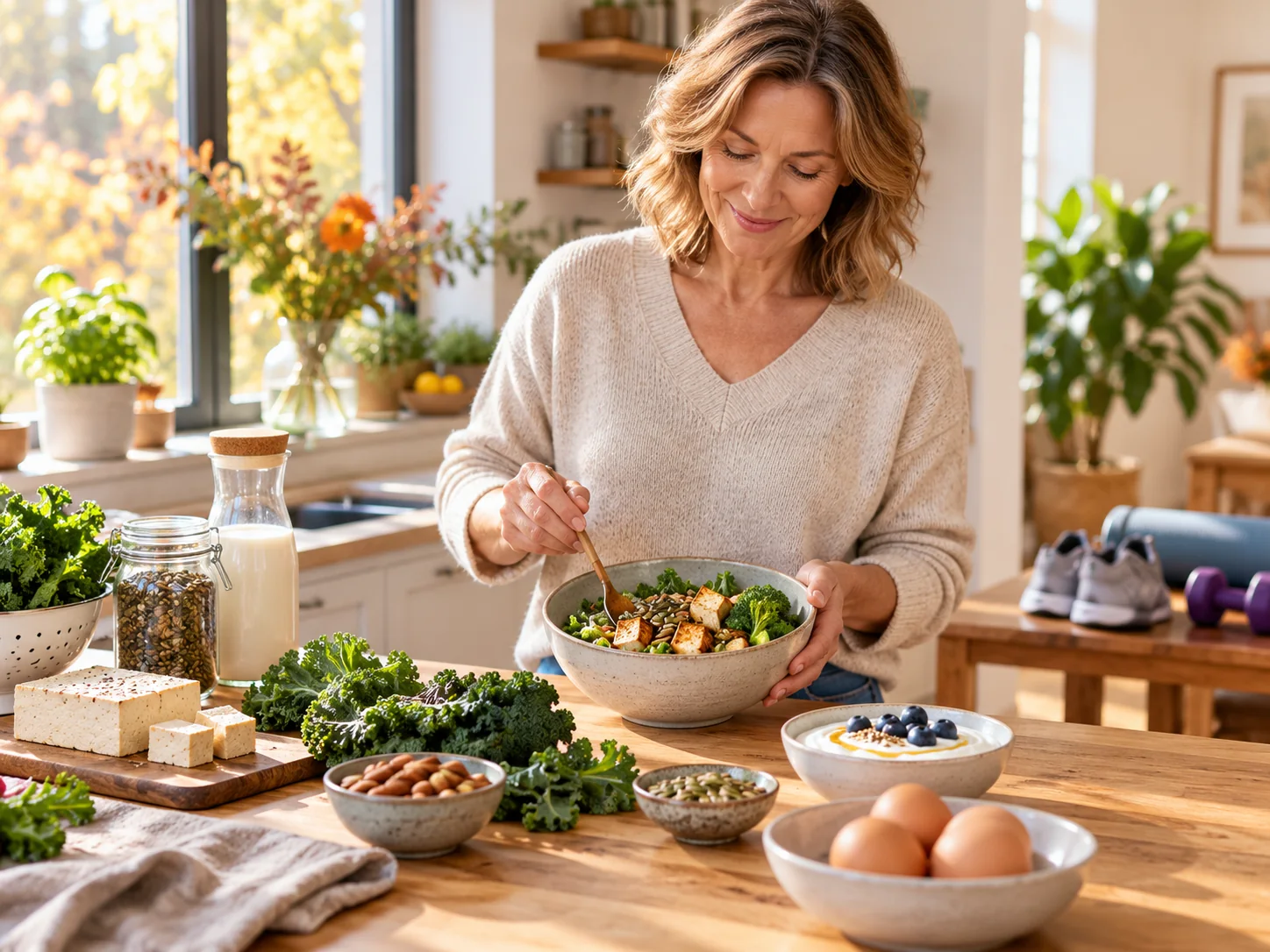
Try to include plenty of vegetables, fruit, nuts, seeds, beans, wholegrains and other nutritious foods in your everyday diet.
Calcium-rich foods such as milk, yoghurt, cheese, calcium-fortified plant alternatives, calcium-set tofu and certain green vegetables can all help.
💪 Keep moving and build strength
Our bones benefit from movement!
Weight-bearing activities such as brisk walking, dancing and jogging, alongside resistance exercises or strength training, can help us maintain bone strength and muscle mass.
Building stronger muscles can also improve balance and reduce the risk of falls, which becomes increasingly important as we get older.
The key is finding activities that are suitable for you and that you enjoy enough to keep doing.
If you already have osteoporosis or a history of fractures, it's worth getting advice about which exercises are safest for you.
☀️ Don't forget vitamin D
Vitamin D helps our bodies absorb calcium, making it essential for healthy bones and muscles.
In the UK, we're advised to consider taking a daily 10 microgram vitamin D supplement during autumn and winter, when we may not get enough sunlight to make the vitamin D we need.
Some people may benefit from supplementation throughout the year, depending on their individual circumstances.
🥛 Do you need calcium supplements?
Not necessarily!
Most adults should be able to get the calcium they need from a varied, balanced diet.
However, supplements may be appropriate for some people, particularly if they're struggling to meet their calcium requirements through food alone.
It's always worth discussing supplements with a healthcare professional rather than automatically taking them.
🌿 Look after your overall lifestyle
Bone health isn't just about one nutrient or one particular exercise.
Not smoking, keeping alcohol within recommended limits, eating well, staying active and maintaining healthy muscle mass can all help protect our bones as we age.
It's the combination of these everyday habits that matters.
What about bone health during menopause?
This is something I think is particularly important for women to be aware of.
As oestrogen levels fall during menopause, bone loss can accelerate, increasing the risk of osteoporosis later in life.
Making sure you're getting enough calcium, vitamin D and protein, alongside regular weight-bearing and strengthening exercise, can be especially helpful during this stage of life.
Hormone replacement therapy (HRT) may also help maintain bone strength and reduce the risk of osteoporosis for some women.
Whether HRT is appropriate for you is something to discuss with your GP or menopause specialist.
Can weight-loss injections affect bone health?
With the increasing use of weight-loss injections, particularly GLP-1 medicines, it's important to think about muscle and bone health alongside weight loss.
We're still learning about the long-term effects of these medicines on fracture risk.
However, rapid or substantial weight loss can sometimes be accompanied by a reduction in muscle mass, and potentially bone density too.
That's why adequate protein intake and regular resistance exercise are important considerations during weight loss.
It's not simply about the number on the scales. Maintaining muscle strength and supporting your overall health matters too.
It's never too early, or too late, to look after your bones
We often don't think about bone health until there's a problem, but it's something we can support throughout our lives.
Small, consistent changes to our nutrition, movement and lifestyle can all contribute to healthier bones as we get older.
If you're concerned about your bone health, your diet, or the impact of weight loss or menopause on your bones, I'd be happy to help.
Together, we can look at your nutrition and lifestyle and find practical, realistic ways to support your bone health and overall wellbeing.
And if you have particular risk factors for osteoporosis, it's also worth speaking to your GP about your individual fracture risk and whether further assessment would be helpful.
Ange | Newutrition
Information provided by NewUtrition is for general educational purposes and is not a substitute for personalised medical advice. Please speak to an appropriate healthcare professional about individual medical concerns.